✨ New Arrivals Just Dropped!Explore

DSM-5® Classification**
Pages: 183,
Specialty: Psychiatry,
Publisher: APA,
Publication Year: 2015,
Cover: Spiral bound,
Dimensions: 106x165x5.08mm
This handy DSM-5 (R) Classification provides a ready reference to the DSM-5 classification of disorders, as well as the DSM-5 listings of ICD-9-CM and ICD-10-CM codes for all DSM-5 diagnoses. To be used in tandem with DSM-5 (R) or the Desk Reference to the Diagnostic Criteria From DSM-5 (R), the DSM-5 (R) Classification makes accessing the proper diagnostic codes quick and convenient.With the advent of ICD-10-CM implementation in the United States on October 1, 2015, this resource provides quick access to the following: A The DSM-5 (R) classification of disorders, presented in the same sequence as in DSM-5 (R), with both ICD-9-CM and ICD-10-CM codes. All subtypes and specifiers for each DSM-5 (R) disorder are included.A An alphabetical listing of all DSM-5 diagnoses with their associated ICD-9-CM and ICD-10-CM codes.A Separate numerical listings according to the ICD-9-CM codes and the ICD-10-CM codes for each DSM-5 (R) diagnosis.A For all listings, any codable subtypes and specifiers are included with their corresponding ICD-9-CM or ICD-10-CM codes, if applicable. The easy-to-use format will prove indispensable to a diverse audience -- for example, clinicians in a variety of fields, including psychiatry, primary care medicine, and psychology; coders working in medical centers and clinics; insurance companies processing benefit claims; individuals conducting utilization or quality assurance reviews of specific cases; and community mental health organizations at the state or county level.show more
Specialty: Psychiatry,
Publisher: APA,
Publication Year: 2015,
Cover: Spiral bound,
Dimensions: 106x165x5.08mm
This handy DSM-5 (R) Classification provides a ready reference to the DSM-5 classification of disorders, as well as the DSM-5 listings of ICD-9-CM and ICD-10-CM codes for all DSM-5 diagnoses. To be used in tandem with DSM-5 (R) or the Desk Reference to the Diagnostic Criteria From DSM-5 (R), the DSM-5 (R) Classification makes accessing the proper diagnostic codes quick and convenient.With the advent of ICD-10-CM implementation in the United States on October 1, 2015, this resource provides quick access to the following: A The DSM-5 (R) classification of disorders, presented in the same sequence as in DSM-5 (R), with both ICD-9-CM and ICD-10-CM codes. All subtypes and specifiers for each DSM-5 (R) disorder are included.A An alphabetical listing of all DSM-5 diagnoses with their associated ICD-9-CM and ICD-10-CM codes.A Separate numerical listings according to the ICD-9-CM codes and the ICD-10-CM codes for each DSM-5 (R) diagnosis.A For all listings, any codable subtypes and specifiers are included with their corresponding ICD-9-CM or ICD-10-CM codes, if applicable. The easy-to-use format will prove indispensable to a diverse audience -- for example, clinicians in a variety of fields, including psychiatry, primary care medicine, and psychology; coders working in medical centers and clinics; insurance companies processing benefit claims; individuals conducting utilization or quality assurance reviews of specific cases; and community mental health organizations at the state or county level.show more
Product Information
Product Information
Shipping & Returns
Shipping & Returns


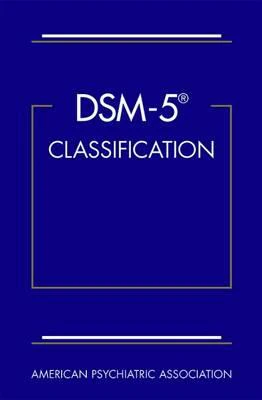


DSM-5® Classification**
DSM-5® Classification**
Pages: 183,
Specialty: Psychiatry,
Publisher: APA,
Publication Year: 2015,
Cover: Spiral bound,
Dimensions: 106x165x5.08mm
This handy DSM-5 (R) Classification provides a ready reference to the DSM-5 classification of disorders, as well as the DSM-5 listings of ICD-9-CM and ICD-10-CM codes for all DSM-5 diagnoses. To be used in tandem with DSM-5 (R) or the Desk Reference to the Diagnostic Criteria From DSM-5 (R), the DSM-5 (R) Classification makes accessing the proper diagnostic codes quick and convenient.With the advent of ICD-10-CM implementation in the United States on October 1, 2015, this resource provides quick access to the following: A The DSM-5 (R) classification of disorders, presented in the same sequence as in DSM-5 (R), with both ICD-9-CM and ICD-10-CM codes. All subtypes and specifiers for each DSM-5 (R) disorder are included.A An alphabetical listing of all DSM-5 diagnoses with their associated ICD-9-CM and ICD-10-CM codes.A Separate numerical listings according to the ICD-9-CM codes and the ICD-10-CM codes for each DSM-5 (R) diagnosis.A For all listings, any codable subtypes and specifiers are included with their corresponding ICD-9-CM or ICD-10-CM codes, if applicable. The easy-to-use format will prove indispensable to a diverse audience -- for example, clinicians in a variety of fields, including psychiatry, primary care medicine, and psychology; coders working in medical centers and clinics; insurance companies processing benefit claims; individuals conducting utilization or quality assurance reviews of specific cases; and community mental health organizations at the state or county level.show more
Specialty: Psychiatry,
Publisher: APA,
Publication Year: 2015,
Cover: Spiral bound,
Dimensions: 106x165x5.08mm
This handy DSM-5 (R) Classification provides a ready reference to the DSM-5 classification of disorders, as well as the DSM-5 listings of ICD-9-CM and ICD-10-CM codes for all DSM-5 diagnoses. To be used in tandem with DSM-5 (R) or the Desk Reference to the Diagnostic Criteria From DSM-5 (R), the DSM-5 (R) Classification makes accessing the proper diagnostic codes quick and convenient.With the advent of ICD-10-CM implementation in the United States on October 1, 2015, this resource provides quick access to the following: A The DSM-5 (R) classification of disorders, presented in the same sequence as in DSM-5 (R), with both ICD-9-CM and ICD-10-CM codes. All subtypes and specifiers for each DSM-5 (R) disorder are included.A An alphabetical listing of all DSM-5 diagnoses with their associated ICD-9-CM and ICD-10-CM codes.A Separate numerical listings according to the ICD-9-CM codes and the ICD-10-CM codes for each DSM-5 (R) diagnosis.A For all listings, any codable subtypes and specifiers are included with their corresponding ICD-9-CM or ICD-10-CM codes, if applicable. The easy-to-use format will prove indispensable to a diverse audience -- for example, clinicians in a variety of fields, including psychiatry, primary care medicine, and psychology; coders working in medical centers and clinics; insurance companies processing benefit claims; individuals conducting utilization or quality assurance reviews of specific cases; and community mental health organizations at the state or county level.show more
$52.50
DSM-5® Classification**—
$52.50
Product Information
Product Information
Shipping & Returns
Shipping & Returns
Description
Pages: 183,
Specialty: Psychiatry,
Publisher: APA,
Publication Year: 2015,
Cover: Spiral bound,
Dimensions: 106x165x5.08mm
This handy DSM-5 (R) Classification provides a ready reference to the DSM-5 classification of disorders, as well as the DSM-5 listings of ICD-9-CM and ICD-10-CM codes for all DSM-5 diagnoses. To be used in tandem with DSM-5 (R) or the Desk Reference to the Diagnostic Criteria From DSM-5 (R), the DSM-5 (R) Classification makes accessing the proper diagnostic codes quick and convenient.With the advent of ICD-10-CM implementation in the United States on October 1, 2015, this resource provides quick access to the following: A The DSM-5 (R) classification of disorders, presented in the same sequence as in DSM-5 (R), with both ICD-9-CM and ICD-10-CM codes. All subtypes and specifiers for each DSM-5 (R) disorder are included.A An alphabetical listing of all DSM-5 diagnoses with their associated ICD-9-CM and ICD-10-CM codes.A Separate numerical listings according to the ICD-9-CM codes and the ICD-10-CM codes for each DSM-5 (R) diagnosis.A For all listings, any codable subtypes and specifiers are included with their corresponding ICD-9-CM or ICD-10-CM codes, if applicable. The easy-to-use format will prove indispensable to a diverse audience -- for example, clinicians in a variety of fields, including psychiatry, primary care medicine, and psychology; coders working in medical centers and clinics; insurance companies processing benefit claims; individuals conducting utilization or quality assurance reviews of specific cases; and community mental health organizations at the state or county level.show more
Specialty: Psychiatry,
Publisher: APA,
Publication Year: 2015,
Cover: Spiral bound,
Dimensions: 106x165x5.08mm
This handy DSM-5 (R) Classification provides a ready reference to the DSM-5 classification of disorders, as well as the DSM-5 listings of ICD-9-CM and ICD-10-CM codes for all DSM-5 diagnoses. To be used in tandem with DSM-5 (R) or the Desk Reference to the Diagnostic Criteria From DSM-5 (R), the DSM-5 (R) Classification makes accessing the proper diagnostic codes quick and convenient.With the advent of ICD-10-CM implementation in the United States on October 1, 2015, this resource provides quick access to the following: A The DSM-5 (R) classification of disorders, presented in the same sequence as in DSM-5 (R), with both ICD-9-CM and ICD-10-CM codes. All subtypes and specifiers for each DSM-5 (R) disorder are included.A An alphabetical listing of all DSM-5 diagnoses with their associated ICD-9-CM and ICD-10-CM codes.A Separate numerical listings according to the ICD-9-CM codes and the ICD-10-CM codes for each DSM-5 (R) diagnosis.A For all listings, any codable subtypes and specifiers are included with their corresponding ICD-9-CM or ICD-10-CM codes, if applicable. The easy-to-use format will prove indispensable to a diverse audience -- for example, clinicians in a variety of fields, including psychiatry, primary care medicine, and psychology; coders working in medical centers and clinics; insurance companies processing benefit claims; individuals conducting utilization or quality assurance reviews of specific cases; and community mental health organizations at the state or county level.show more