✨ New Arrivals Just Dropped!Explore

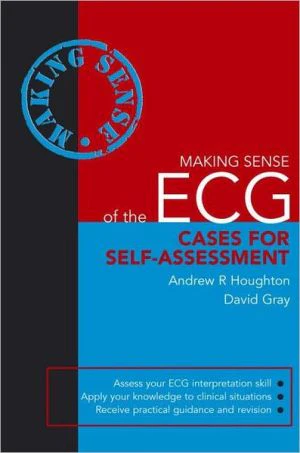
Making Sense of the ECG : A Hands-On Guide, 4e**
Pages: 264,
Specialty: Cardiology,
Publisher: Taylor & Francis,
Publication Year: 2014,
Cover: Paperback,
Dimensions: 189x246x12.7mm
Highly Commended, BMA Medical Book Awards 2015 Interpreting an ECG correctly and working out what to do next can seem like a daunting task to the non-specialist, yet it is a skill that will be invaluable to any doctor, nurse, or paramedic when evaluating the condition of a patient. Making Sense of the ECG has been written specifically with this in mind, and will help the student and more experienced healthcare practitioner to identify and answer crucial questions, including: Are these abnormalities significant? How to I distinguish between VT and SVT? Has the patient had a myocardial infarction? How do I measure the QT interval? Should I refer this patient to a cardiologist? This practical, easy-to-read and easy-to-remember guide to the ECG as a tool for diagnosis and management has been fully updated in its fourth edition to reflect the latest guidelines. show more
Specialty: Cardiology,
Publisher: Taylor & Francis,
Publication Year: 2014,
Cover: Paperback,
Dimensions: 189x246x12.7mm
Highly Commended, BMA Medical Book Awards 2015 Interpreting an ECG correctly and working out what to do next can seem like a daunting task to the non-specialist, yet it is a skill that will be invaluable to any doctor, nurse, or paramedic when evaluating the condition of a patient. Making Sense of the ECG has been written specifically with this in mind, and will help the student and more experienced healthcare practitioner to identify and answer crucial questions, including: Are these abnormalities significant? How to I distinguish between VT and SVT? Has the patient had a myocardial infarction? How do I measure the QT interval? Should I refer this patient to a cardiologist? This practical, easy-to-read and easy-to-remember guide to the ECG as a tool for diagnosis and management has been fully updated in its fourth edition to reflect the latest guidelines. show more
Product Information
Product Information
Shipping & Returns
Shipping & Returns





Making Sense of the ECG : A Hands-On Guide, 4e**
Making Sense of the ECG : A Hands-On Guide, 4e**
Pages: 264,
Specialty: Cardiology,
Publisher: Taylor & Francis,
Publication Year: 2014,
Cover: Paperback,
Dimensions: 189x246x12.7mm
Highly Commended, BMA Medical Book Awards 2015 Interpreting an ECG correctly and working out what to do next can seem like a daunting task to the non-specialist, yet it is a skill that will be invaluable to any doctor, nurse, or paramedic when evaluating the condition of a patient. Making Sense of the ECG has been written specifically with this in mind, and will help the student and more experienced healthcare practitioner to identify and answer crucial questions, including: Are these abnormalities significant? How to I distinguish between VT and SVT? Has the patient had a myocardial infarction? How do I measure the QT interval? Should I refer this patient to a cardiologist? This practical, easy-to-read and easy-to-remember guide to the ECG as a tool for diagnosis and management has been fully updated in its fourth edition to reflect the latest guidelines. show more
Specialty: Cardiology,
Publisher: Taylor & Francis,
Publication Year: 2014,
Cover: Paperback,
Dimensions: 189x246x12.7mm
Highly Commended, BMA Medical Book Awards 2015 Interpreting an ECG correctly and working out what to do next can seem like a daunting task to the non-specialist, yet it is a skill that will be invaluable to any doctor, nurse, or paramedic when evaluating the condition of a patient. Making Sense of the ECG has been written specifically with this in mind, and will help the student and more experienced healthcare practitioner to identify and answer crucial questions, including: Are these abnormalities significant? How to I distinguish between VT and SVT? Has the patient had a myocardial infarction? How do I measure the QT interval? Should I refer this patient to a cardiologist? This practical, easy-to-read and easy-to-remember guide to the ECG as a tool for diagnosis and management has been fully updated in its fourth edition to reflect the latest guidelines. show more
$3.67
Original: $10.50
-65%Making Sense of the ECG : A Hands-On Guide, 4e**—
$10.50
$3.67Product Information
Product Information
Shipping & Returns
Shipping & Returns
Description
Pages: 264,
Specialty: Cardiology,
Publisher: Taylor & Francis,
Publication Year: 2014,
Cover: Paperback,
Dimensions: 189x246x12.7mm
Highly Commended, BMA Medical Book Awards 2015 Interpreting an ECG correctly and working out what to do next can seem like a daunting task to the non-specialist, yet it is a skill that will be invaluable to any doctor, nurse, or paramedic when evaluating the condition of a patient. Making Sense of the ECG has been written specifically with this in mind, and will help the student and more experienced healthcare practitioner to identify and answer crucial questions, including: Are these abnormalities significant? How to I distinguish between VT and SVT? Has the patient had a myocardial infarction? How do I measure the QT interval? Should I refer this patient to a cardiologist? This practical, easy-to-read and easy-to-remember guide to the ECG as a tool for diagnosis and management has been fully updated in its fourth edition to reflect the latest guidelines. show more
Specialty: Cardiology,
Publisher: Taylor & Francis,
Publication Year: 2014,
Cover: Paperback,
Dimensions: 189x246x12.7mm
Highly Commended, BMA Medical Book Awards 2015 Interpreting an ECG correctly and working out what to do next can seem like a daunting task to the non-specialist, yet it is a skill that will be invaluable to any doctor, nurse, or paramedic when evaluating the condition of a patient. Making Sense of the ECG has been written specifically with this in mind, and will help the student and more experienced healthcare practitioner to identify and answer crucial questions, including: Are these abnormalities significant? How to I distinguish between VT and SVT? Has the patient had a myocardial infarction? How do I measure the QT interval? Should I refer this patient to a cardiologist? This practical, easy-to-read and easy-to-remember guide to the ECG as a tool for diagnosis and management has been fully updated in its fourth edition to reflect the latest guidelines. show more